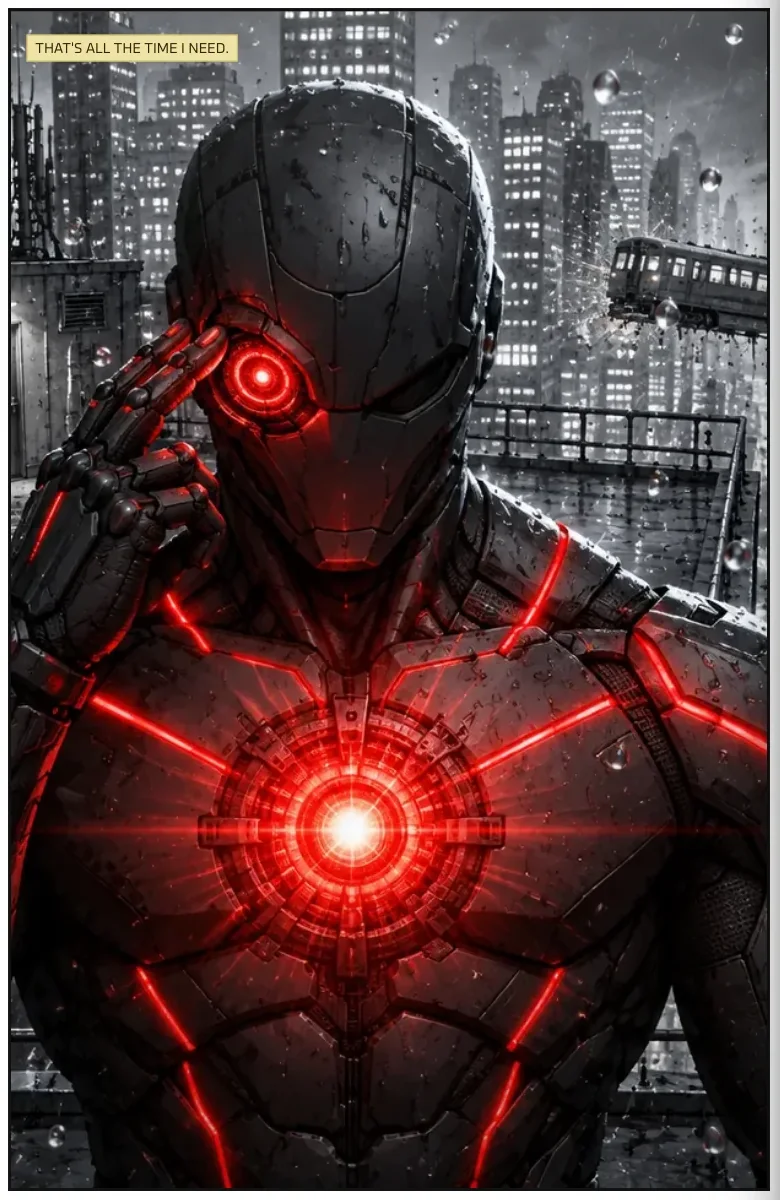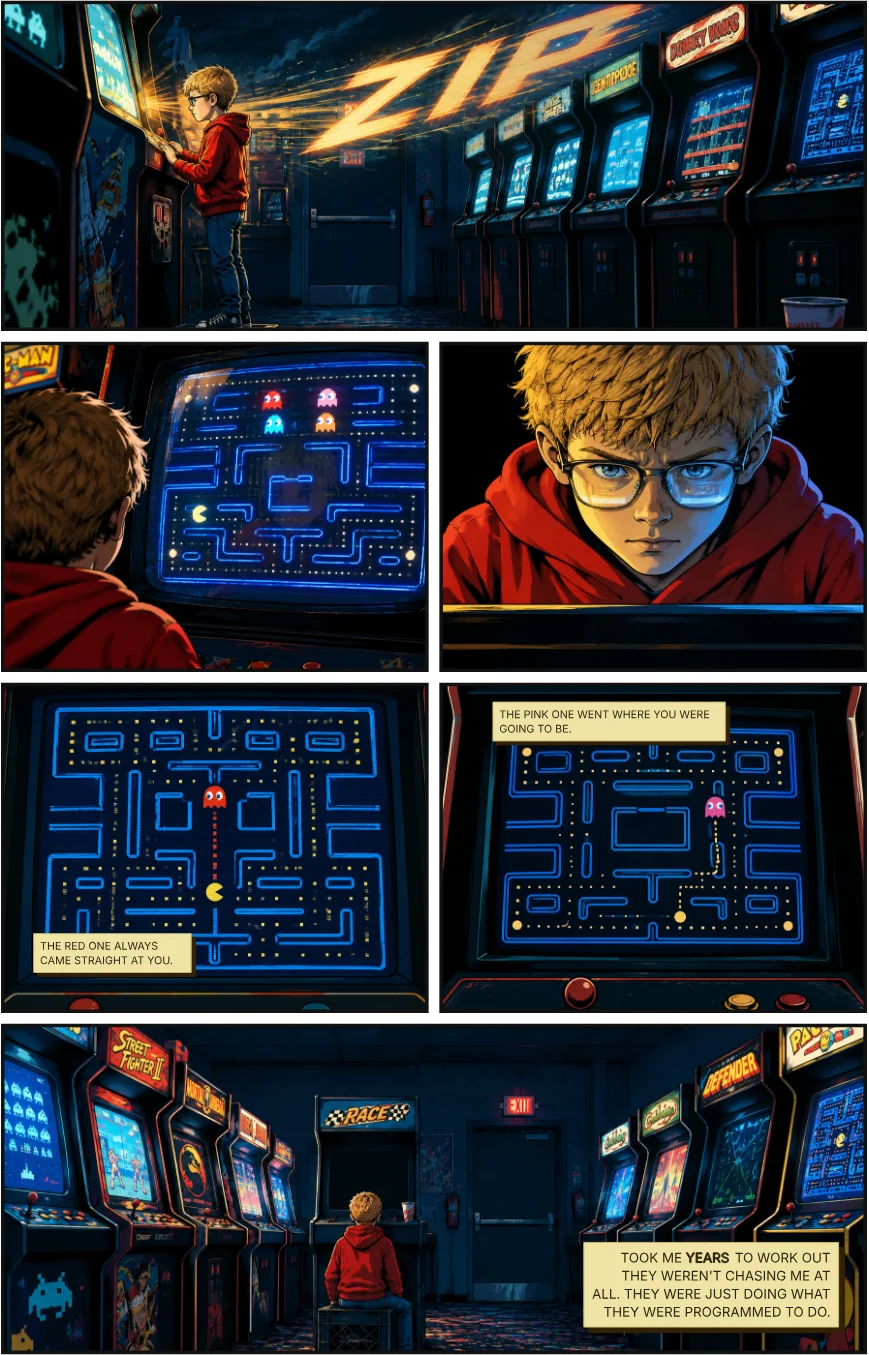
Comic, graphic novel and manga script template
A free script template to download, and a plain guide to what a good comic, graphic novel or manga script contains, from the overview to the panel-by-panel script.
A comic, graphic novel or manga script tells the artist what is on every page and panel. It sets out who is in the story and where it happens, then describes each panel, with its captions, dialogue and sound effects. Written well, it lets an artist, or an AI, draw the book you pictured without guessing.
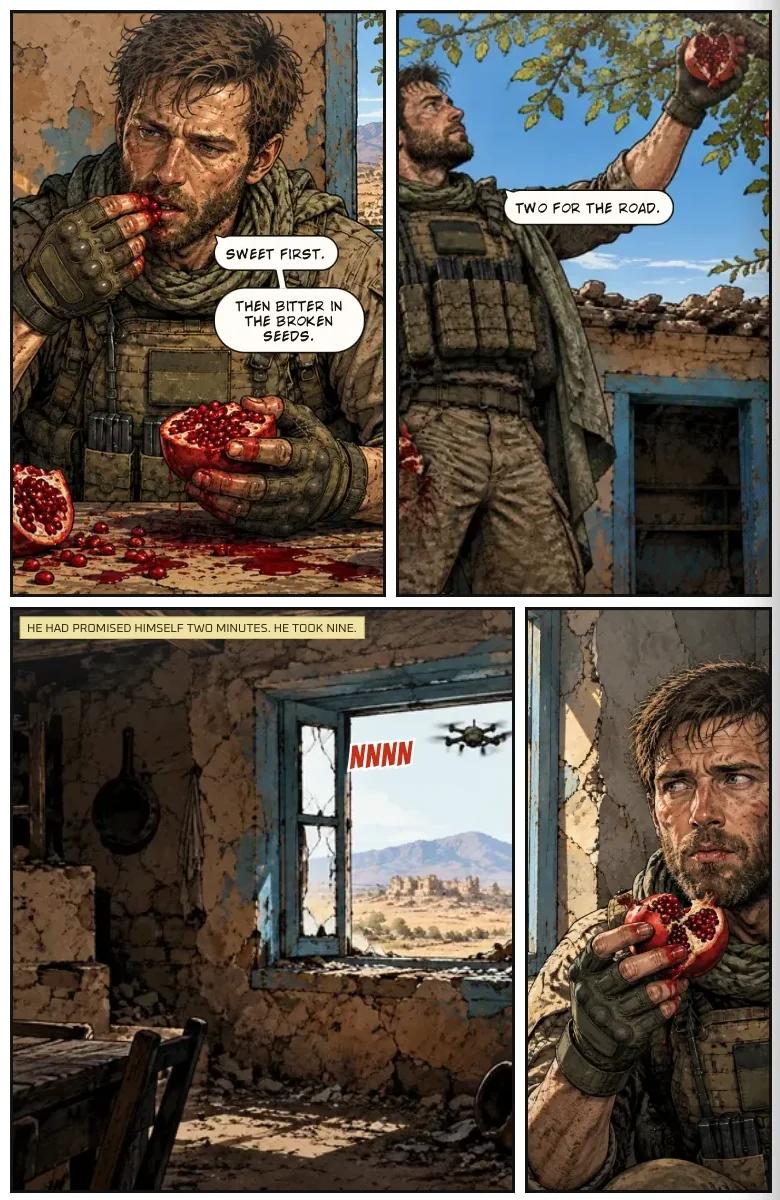
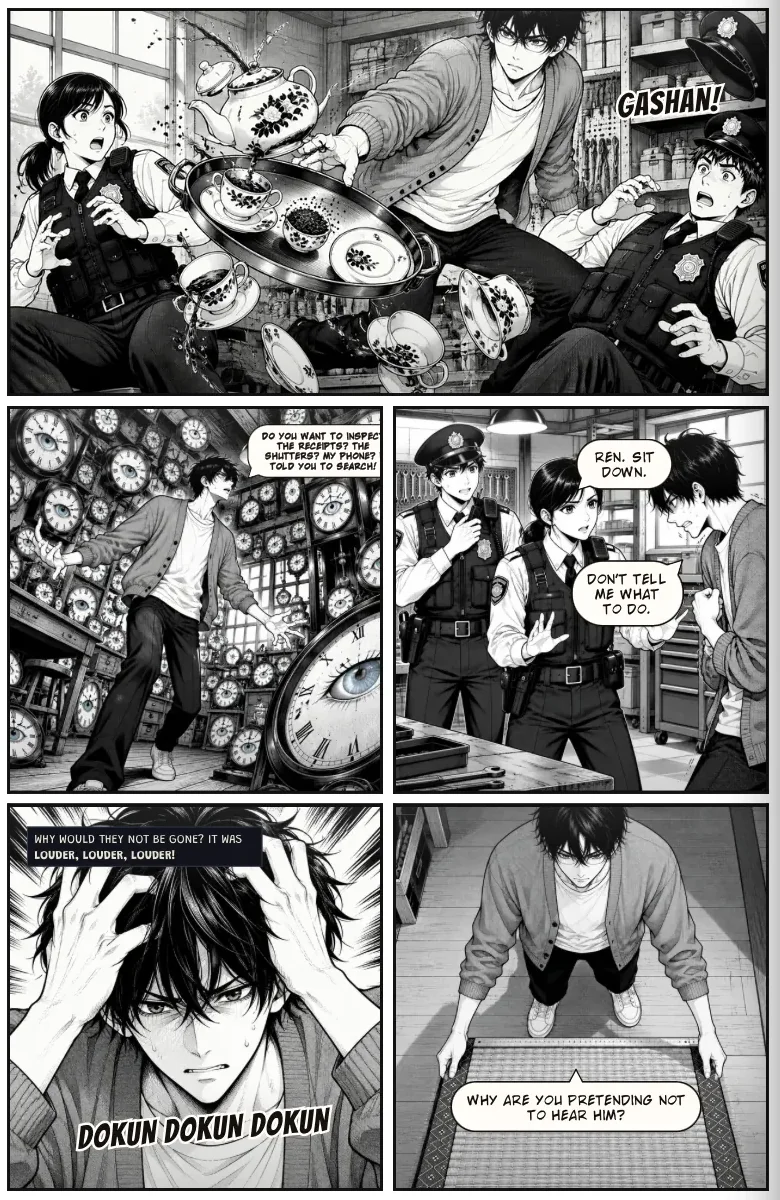
Two pages made in Youdio Studio from written scripts: a painted comic page and a black and white manga page.
We build your book from what your script says, so the more of the picture and the voices you put on the page, the less we have to invent. This is the shape that works best. It is a guide, not a rule: any script that covers these things will do.
01Overview
The big picture, at the top, once. Include:
- Title and a one-line premise
- Format: how many pages (for example “a 24 page comic”) and roughly how many panels to a page
- Audience and tone
- Visual world: art style, colours, era and light, said once here instead of in every panel
- A short synopsis: the beginning, the middle and how it ends
02Characters
One short card for each person or creature who appears. Include:
- Name, exactly as you will use it in the script
- Role in the story, in a line
- Look: age, build, face, hair, skin, anything that makes them recognisable
- Outfits: give each one a name (“School uniform”, “Rain coat”) and say what it is
- Voice: long or short sentences, favourite words, what they would never say
03Locations
Each place that comes back, described once so it looks the same every time. Include:
- Name of the place
- What it looks like: shapes, materials, size, what is always there
- Light and mood: time of day, weather, how it feels
- Anything useful for framing: where the door is, what can be seen from a window
04Props
The objects that matter, so they stay the same from panel to panel. Include:
- Name of the object
- What it looks like: colour, size, material, any marking
- Why it matters in the story
05Story structure
The shape of the book, before the panels. Include:
- Chapters or acts, each with the pages it covers (for example “Act one, pages 1 to 6”)
- What happens in each, in a few lines
- The turn at the end of each chapter, or the moment that makes the reader turn the page
06Page and panel script
The book itself, page by page, panel by panel. Include:
- PAGE 1, PAGE 2 and so on, each as a heading
- PANEL 1, PANEL 2 under it. Three to six to a page; one for a big reveal
- Scene: who is in the picture, where, and the single moment that is happening. Add the framing (wide, close-up, from above) when it matters
- CAPTION: narration, if any
- Dialogue, one line each: NAME: what they say
- SFX: a sound effect, if any
A panel, written out
This is the full script format in miniature: a heading for the page, a numbered panel, what is seen, then caption, speaker and sound effect.
PAGE 1

PANEL 1  (wide)
Scene: Wide view of Lantern Hill at dusk. Mina, a small girl in a yellow raincoat, climbs the stone steps carrying a brass lantern. The village lights come on below her.
CAPTION: Every night, someone has to light the moon.

PANEL 2
Scene: Close-up on Mina's face, lantern light on her cheeks, eyes wide at something above her.
MINA: It's early. The moon isn't even up yet.
SFX: CLINK
Comic script formats compared
The page and panel layout here is the standard comic-book “full script” format that writers use to brief an artist: PAGE, PANEL, a description of what is seen, CAPTION, then each speaker's lines and any SFX. If you already write that way, you are done. If you write in the plot-first style (a plot for each page, with the dialogue added later) or in screenplay format, that works too: the more of the characters, places and key moments you spell out, the better the book.
- Full script. Every page and panel is described, with the dialogue written in. The clearest brief for an artist, and the format the template uses.
- Plot first. The writer gives a plot for each page, the art comes next, and the dialogue is added afterwards. It leaves the artist more room.
- Screenplay. Scene headings, action and dialogue. It needs breaking into pages and panels, which is a good first pass for an adaptation. See how to turn your script into comic pages.
Use an AI assistant to fill it in
Give the template to your own AI assistant (ChatGPT, Claude, Gemini or whichever you use) along with your idea, and ask it to fill it in. For example: “Here is my story idea: [your idea]. Please fill in this script template for it, keeping every heading, and write the page and panel script in full. Keep the dialogue short and describe only what can be seen.” Then read what it gives you, and change anything that is not how you pictured it.
Rules of thumb
- One moment per panel. If two things happen one after another, they are two panels.
- Keep spoken lines short. Words you write as dialogue or captions are kept exactly as you wrote them.
- Use each name the same way every time, and the same name in the cast cards and the panels.
- Put the art style once in the overview, not in every panel.
- Reference material (a world bible, notes, a cast list) is welcome. Only what is story becomes pages.
- If your document has pictures of a character, place or prop with its name beside them, we use them as references.
- Word, PDF or plain text all work.
From script to book
Once your script is ready, Youdio Studio can build your comic, graphic novel or manga from it: the cast, places and props, the pages and the lettering, with the artwork drawn from your descriptions. Choose Script to book, drop your document in, and see the full process in our guide to making a graphic novel with AI.
Frequently asked questions
Does this work for graphic novels and manga?
Yes. A graphic novel script and a manga script are built from the same parts: an overview, a cast, places and props, then page and panel descriptions with captions, dialogue and sound effects. For a longer graphic novel, group the pages into chapters or acts. For manga, say in the overview that it is manga and how it should read, and describe the style, for example black and white with screentone.
What is the standard comic script format?
The most common format is the “full script”: the script is broken into pages, each page into numbered panels, and each panel has a description of what the reader sees, then any caption, each character's dialogue and any sound effect. It is the format writers use to brief an artist. This template follows it.
How many panels should a comic page have?
Three to six is a comfortable range for most pages. Quiet scenes can use fewer, larger panels, and a big reveal can take a whole page. Aim for one clear moment per panel.
Do I have to use this exact format?
No. This is best practice, not a requirement. Youdio Studio can build a book from a comic script, a screenplay, a prose story, a treatment or a mix of them. The more of the characters, places and key moments you spell out, the closer the book will be to what you pictured.
Is the template free?
Yes. It is a Word document you can download, edit and keep. It also opens in Google Docs, Pages and LibreOffice.
Can an AI assistant fill in the template for me?
Yes. Give the template to the assistant you already use, along with your idea, and ask it to fill it in and keep every heading. Read what it writes and change anything that is not how you pictured it before you use it.